Tesla Interior Parts – Understanding Market Demand and Why Distributors Must Run a Dual-Line Strategy

For distributors, repair centers, and resellers, understanding this market means understanding the behavior of Tesla owners themselves and how Tesla interior accessories, repair parts, and lifecycle demand are all interconnected.
Why Tesla Interior Parts Are Becoming Essential – It Starts With User Experience
Tesla owners differ fundamentally from traditional gasoline-vehicle owners. They treat the cabin as a living space, not merely transportation. This mindset directly drives global demand for Tesla interior parts and interior-upgrade components across multiple models, especially Model 3 and Model Y.
New Tesla owners often prioritize the look, feel, and practicality of the interior from the very first day of ownership. They invest in Tesla interior accessories such as dashboard trims, console covers, upgraded storage solutions, and offer complete Tesla offers aftermarket interior kits to personalize and protect their vehicles. High daily usage accelerates wear on trims, clips, and touch surfaces, and this is even more pronounced for ride-hailing drivers and fleet operators. As a result, the interior becomes one of the first areas where wear, damage, and personalization demands converge.
The global used-Tesla market amplifies this trend. Buyers of pre-owned vehicles frequently replace worn or faded panels with Tesla interior replacement parts to restore cabin appeal and improve resale value. In many cases, a refreshed interior delivers more perceived value than any mechanical upgrade, making interior parts a practical and emotionally resonant investment.
Who Buys Tesla Interior Parts? The Market Is Broader Than Expected
Many distributors assume that only new Tesla owners purchase interior accessories. In reality, the buyer base for Tesla’s interior parts is far broader and structurally diverse, spanning multiple customer segments and use cases.
New Tesla owners are the most visible group. They typically look for Model 3 interior parts and Model Y interior upgrades soon after delivery, including dashboard covers, console wraps, seat-side panels, and ambient lighting kits. Their motivation is primarily personalization and comfort, and they are often willing to pay a premium for products that elevate the overall cabin experience.
However, a second, rapidly growing segment consists of used-vehicle buyers. As the population of pre-owned Model S, Model X, Model 3, and Model Y vehicles expands, so does the need for Tesla interior replacement parts to renew or repair worn trim, scratched panels, and broken clips. For these owners, restoration is not a luxury; it is a necessary step to make an older vehicle feel “new enough” for daily use or resale.
Ride-hailing drivers and shared mobility fleets represent another high-value group. Their vehicles experience accelerated wear in high-touch areas, which naturally drives recurring demand for durable Tesla interior parts and accessories. Because their income depends on the usability and presentation of the vehicle, they treat interior upkeep as an operational expense rather than a discretionary purchase.
Professional repair shops and independent workshops also purchase interior components at scale. Many repairs that appear mechanical or collision-related still require the removal and replacement of interior trims, clips, and panels.In this context,
Tesla interior parts are bundled into broader repair jobs and become an integrated part of the workshop’s parts consumption.
Interior Parts Alone Are Not Enough – Repair Parts Form the Other Half of the Equation
While interior parts and Tesla interior accessories drive volume and visibility, long-term profitability in the Tesla aftermarket still relies heavily on repair parts. The key insight for distributors is that this is not a choice between two paths. The strongest players in the market build both lines together: interior and repair.
Interior products are lightweight, fast-moving, and highly suitable for online sales and promotional campaigns. They attract new customers, generate repeat orders, and serve as an accessible entry point into the brand. In contrast, repair parts—such as sensors, suspension components, control modules, and high-wear mechanical items—offer higher margins and create deep, recurring relationships with workshops and fleet operators.
For a distributor, a healthy Tesla aftermarket strategy is not “interior or repair,” but “interior and repair.” Interior parts bring in traffic and early-stage customers; repair parts secure long-term revenue and customer stickiness. Together, they create a stable, resilient business model that remains viable even as vehicle sales trends shift in individual markets.

The Warranty-Off Wave – Why Dual-Line Strategy Is Now Mandatory
Tesla’s global delivery peak for Model S, Model X, Model 3, and Model Y occurred roughly between 2014 and 2022, with particularly strong growth in the 2018–2022 period. This has a direct consequence: from 2024 onward, a large number of vehicles around the world are exiting their factory warranty periods. This “warranty-off wave” is reshaping the demand structure for both interior and repair parts.
Once vehicles leave warranty, owners increasingly turn to independent repair networks rather than official service centers. Factors include high official repair costs, rising labor rates, long waiting times, and the reduced economic rationale of paying OEM prices for an older vehicle with lower book value. In this new landscape, independent workshops and distributors must fill the gap with reliable, cost-effective alternatives.
As a result, two demand curves grow in parallel. New-vehicle owners continue to purchase Tesla interior accessories and cosmetic upgrades, especially for Model 3 and Model Y. Meanwhile, out-of-warranty vehicles drive increasing demand for repair parts in critical systems such as suspension, lighting, thermal management, and electronics. The most successful distributors are those who recognize that these two curves are not in competition—they are complementary.
What Tesla Interior Parts Should Distributors Stock?
For distributors evaluating how to structure a Tesla product lineup, the interior category is an ideal foundation. The most effective Tesla interior parts portfolios share several characteristics: They cover high-wear zones, offer both protective and upgrade-oriented products, and span multiple Tesla generations.
High-performing assortments often include Model 3 interior parts and Model Y interior upgrades such as replacement dashboard trims, upgraded console covers, door-panel trims, seat-side panels, and storage enhancements. These parts are light, easy to ship, and well-suited to online channels and cross-border logistics. They also form the backbone of many Tesla aftermarket interior kits, which bundle multiple products into cohesive upgrade packages.
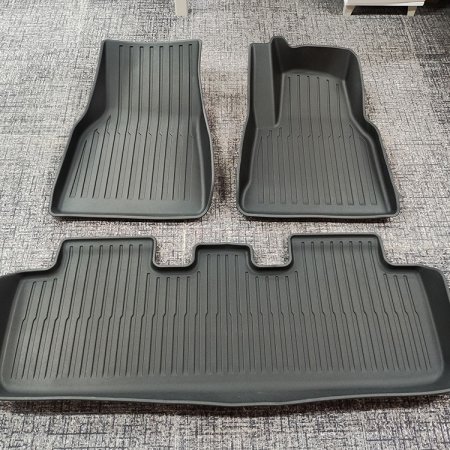
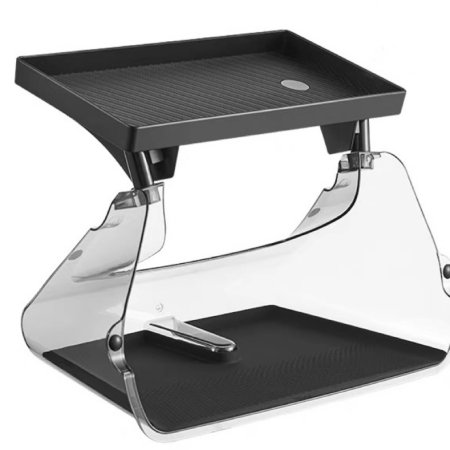
From a B2B standpoint, interior assortments that combine universal accessories with vehicle-specific replacements perform best. Universal items (such as mats and storage boxes) appeal to a wide base, while model-specific items Tesla interior replacement parts, reinforce the distributor’s technical credibility and depth. Together, they allow distributors to serve both consumer-facing retailers and professional workshops.
How Interior and Repair Parts Work Together as a Growth Engine
In practice, interior and repair parts rarely operate in isolation. They reinforce each other in day-to-day workshop operations and reseller workflows. A single repair event often touches both categories. For example, windshield replacement may require new interior clips; sensor upgrades may necessitate trim removal and reinstallation; collision repairs frequently involve both structural and interior components.
For used-car refurbishers, the integration is even more direct. They routinely purchase Tesla interior parts alongside body parts and electronics to transform a tired interior into a marketable selling point. A refreshed cabin helps a used Tesla command a higher resale price and shorter time-on-market, making interior-related investment one of the highest-return decisions in the reconditioning process.
This natural interdependence is why more distributors are designing their catalogs holistically, rather than separating interior parts from mechanical or electronic repair items. When interior and repair parts are managed as a single strategic ecosystem, they generate higher average order values, stronger customer loyalty, and more predictable revenue over time.

Why Partner With Kylin EV Parts for Tesla Interior and Repair Parts
Kylin EV Parts has built its supply chain and product offering specifically for distributors who want to operate a dual-line Tesla aftermarket strategy, combining Tesla’s interior parts with a deep catalog of repair components. Instead of focusing on a narrow slice of the market, Kylin supports the full lifecycle of Tesla ownership—from new-vehicle interior customization to out-of-warranty mechanical and electrical repairs.
Our catalog includes more than 2,000 Tesla SKUs, covering both interior and repair categories across multiple models. We support wholesale purchasing, bulk shipments, and dropshipping arrangements to match the needs of distributors, repair shops, and online resellers. Internal quality controls and part verification processes are designed to ensure consistency and reduce warranty risk for our partners.
Beyond supplying parts, Kylin EV Parts leverages real-world market feedback and failure-pattern analysis to offer practical guidance on which Tesla interior parts and repair items are most likely to perform well in different regions and vehicle-age brackets. Distributors can use this insight to prioritize high-demand SKUs, build balanced stock structures, and minimize trial-and-error in new markets. For product discovery and category exploration, partners can refer to our official website resources and catalog navigation.
When combined, interior and repair parts form a complete Tesla aftermarket business model: interior products bring in customers and drive visible upgrades, while repair parts provide long-term, high-value revenue as vehicles age. By partnering with Kylin EV Parts, distributors gain a one-stop sourcing solution that supports both sides of this model, helping them build a scalable, resilient Tesla aftermarket business.