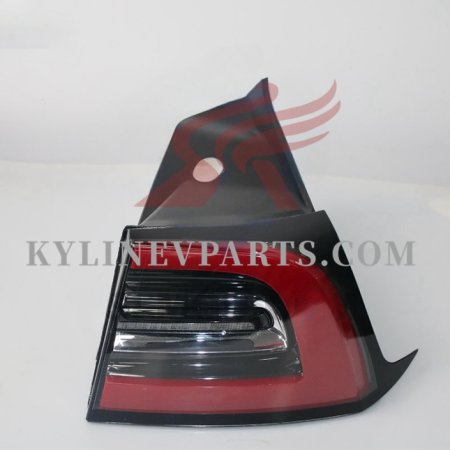
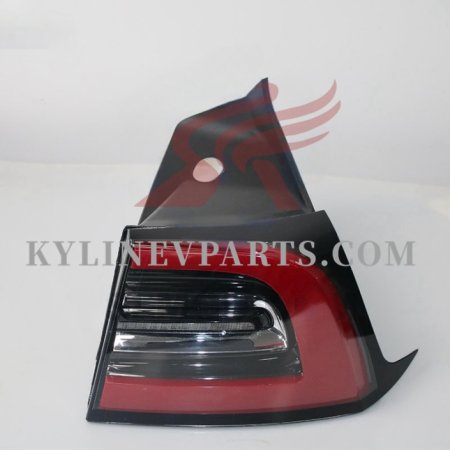
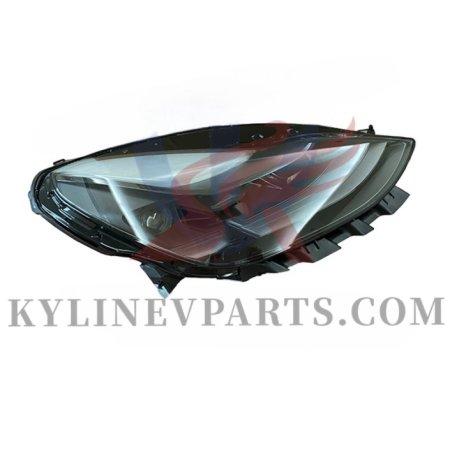
Tesla Model 3 Aftermarket Headlights
A B2B Guide to Compliance, Matching, and Risk Control

Why Tesla Model 3 aftermarket headlights Are No Longer a “Modification” Product
In mature repair markets, Tesla Model 3 aftermarket headlights are no longer a styling purchase. They are a service-parts category driven by collision repair, water ingress, thermal aging, and the fast-growing out-of-warranty population.
For B2B distributors, profit is not created by “selling a headlight.” Profit is created by selling the correct variant, shipped with the correct compliance, installed once, and never returned. That’s why the most valuable supplier for Tesla Model 3 aftermarket headlights is not the lowest-price seller—it’s the partner that reduces mismatch and repeat labor.
Tesla Model 3 Headlight Versions You Must Understand Before Sourcing
The hidden difficulty of Tesla Model 3 aftermarket headlights is not brightness or “looks OEM.” It’s version control. Tesla iterates continuously, and lighting is revision-sensitive because optics, DRL behavior, control modules, and beam patterns are regulated and safety-critical.
At a B2B level, treat Tesla Model 3 aftermarket headlights as a matrix, not a single SKU: vehicle generation, region (ECE vs DOT), drive side (LHD vs RHD), technology differences, and revision suffix changes that can affect connectors and electronics.
The October 2022 Breakpoint: Before vs After
One of the most common sourcing failures happens when buyers assume “same model year = same lamp.” Around October 2022, Tesla updated its internal structure and configuration logic. Vehicles produced before and after this breakpoint may look identical from the outside, but assemblies are not always interchangeable—this is how you get the classic B2B problem: the year is correct, yet the headlight still doesn’t fit.
For distributors, “2022 Model 3 headlight” is not an acceptable purchase description. You must confirm pre-October 2022 vs post-October 2022 before you lock an order for Tesla Model 3 aftermarket headlights.
Grey Base vs Blue Base: Internal Design Differences
Workshops often identify Model 3 headlamps by internal base color, commonly called grey base vs blue base. This is not cosmetic. It signals differences in internal structure, electronics layout, and sometimes optical configuration. Using the wrong base version may cause connector incompatibility, control module communication issues, or install failure despite a correct outer shape.
For scaled distribution, the grey base vs blue base should be part of your matching checklist for Tesla Model 3 aftermarket headlights, especially when dealing with mixed inventory or returned cores.
Gigafactory Origin and Specification Differences
Model 3 vehicles are built across different factories (e.g., Fremont, Shanghai, Berlin). Even with a unified platform strategy, specifications can vary due to supplier sourcing, internal revisions, and market compliance requirements. That’s why two vehicles from the same year but different origins may require different variants of Tesla Model 3 aftermarket headlights.
Why “The Year Is Right, but the Headlight Still Doesn’t Fit”
In B2B operations, this problem is almost always version logic—not bad luck. The root causes are crossing the October 2022 breakpoint, mixing grey-base and blue-base designs, ignoring factory-specific revisions, or assuming visual similarity equals compatibility. Model year alone is never enough when you distribute Tesla Model 3 aftermarket headlights at scale.
Headlight Certification Requirements by Country and Market
If you distribute Tesla Model 3 aftermarket headlights across borders, certification is your risk firewall. The practical rule is simple: markings must match the target market, and the beam pattern must be legal for the drive side.
Europe: ECE / E-mark (R112 + R10)
Most European markets rely on UNECE type approval. For headlamps, UNECE Regulation No. 112 (R112) is a commonly referenced framework for approval markings and technical requirements, while UNECE Regulation No. 10 (R10) is often used for EMC approval of electronic components. If your customer sells to EU repair networks, this is not optional—it’s the baseline.
United States: DOT / FMVSS 108
In the U.S., headlamps must comply with FMVSS No. 108. Workshops and inspectors tend to look for DOT/SAE-related marking discipline and compliant beam performance. This is exactly why “ECE-only” lamps can trigger distribution and liability issues when you move Tesla Model 3 aftermarket headlights into a DOT-driven workflow.
Canada and Other Markets
Canada often aligns closely with U.S.-style enforcement in practice, while many other regions may accept ECE-type approvals depending on inspection and insurance reality. For B2B distributors, the rule is not theory—it’s what your buyer must pass locally.
What Certification Means in Real Distribution Operations
Certification is not a marketing badge. It determines whether your buyer can legally install and invoice the job. For Tesla Model 3 aftermarket headlights, implement two checks: (1) marking check before shipping; (2) beam/drive-side check before stocking. A lamp can be “high quality” and still be illegal if the beam step is wrong.
Use official references as your discipline layer: Tesla service information for fitment logic and workshop reality can be verified via Tesla Service, and catalog navigation can be supported via Tesla EPC.
The Hidden Truth of “Original” Headlights on the Market
There are legitimate remanufactured programs, and there are grey-market “reworked” products. A common grey-market play is building “hybrid” units using used internal modules with remanufactured housings, then re-labeling and marketing them as “OEM.” For B2B distributors, this is not a moral debate—it’s a traceability and liability problem that turns into returns and disputes.
When you source Tesla Model 3 aftermarket headlights, screen suppliers, like you would for safety parts: batch traceability, marking consistency, sealing and vent design, optic stability (cutoff and glare control), and electronics stability after install. If traceability is refused, assume it becomes a return problem.
What Makes a Real B2B-Ready Aftermarket Headlight
Consumer content focuses on brightness and aesthetics. B2B performance is operational: fitment precision, optical compliance, thermal design, ingress protection, and electronics reliability. The KPI is simple: install success rate. “Looks OEM” doesn’t pay you—install success rate pays you when distributing Tesla Model 3 aftermarket headlights.
How B2B Distributors Should Match Model 3 Aftermarket Headlights Correctly
Step 1: Collect the minimum data pack
VIN (best), target market (country), LHD/RHD, photos/video of the failed unit and connector, and a clear requirement: repair replacement vs upgrade look (do not mix).
Step 2: Use official catalog logic as your reference layer
Start with VIN-led catalog discipline whenever possible. Use Tesla EPC as your reference workflow layer, then source. “Catalog first, then sourcing” reduces mismatch on Tesla Model 3 aftermarket headlights.
Step 3: Validate compliance before quoting
Do not quote cross-border unless you confirm whether the market expects UNECE/E-mark logic or FMVSS 108 expectations.
Step 4: Lock revision control
Your RFQ must include a revision suffix. If the supplier proposes substitution, require a compatibility explanation—not “same fit.”
Step 5: Convert into a distributor-grade RFQ
One-page pack: VIN + market + LHD/RHD + target part + revision + photos + quantity + destination. This saves weeks of back-and-forth and protects margins on Tesla Model 3 aftermarket headlights.
 Different Country Requirements: The Practical Distributor View

Turn certification into inventory decisions. If you sell to EU networks, e-marketing discipline becomes the baseline. If you sell to the U.S., FMVSS 108 discipline is non-negotiable. If you operate mixed markets, carry two compliant variants rather than forcing one SKU globally—the return cost will exceed the inventory cost for Tesla Model 3 aftermarket headlights.
Typical B2B Use Cases for Tesla Model 3 Aftermarket Headlights
Collision repair, condensation/water ingress replacement, out-of-warranty repairs, and repair-network stocking are the repeatable demand patterns. In all cases, Tesla Model 3 aftermarket headlights are not impulse purchases—they are scalable service demand.
How We Support B2B Distributors in Model 3 Headlight Sourcing
At Kylin EV Parts, we position headlamps as a system product, not a single SKU. We focus on (1) OE-system mapping and precision matching; (2) market-aware compliance selection; (3) one-stop Tesla procurement, so you consolidate high-frequency service categories beyond headlights.
If your distribution model requires lower return rates and a stable supply, the first conversation should not be “lowest price.” It should be mismatch cost, compliance risk, and how to standardize matching across your network—especially for Tesla Model 3 aftermarket headlights.
FAQ: Tesla Model 3 Aftermarket Headlights (B2B Edition)
Do Tesla Model 3 aftermarket headlights need certificates?
Yes, in markets with inspection or insurance requirements. Minimum: correct markings + legal beam pattern for the drive side.
How do we reduce returns in bulk orders?
Standardize: VIN → catalog logic → market compliance check → revision lock → one-page RFQ pack, plus traceability enforcement.
How do we avoid “fake original” problems?
Don’t buy stories. Buy traceability. If traceability is missing, assume returns.
Can we carry one universal SKU for all countries?
Rarely. Beam pattern and marking requirements make “one SKU globally” a return-risk strategy, not a growth strategy.
Closing: Precision Scales Better Than Speed
For large distributors, Tesla Model 3 aftermarket headlights should be managed like a controlled category: version discipline, compliance discipline, and supplier discipline. If you do that, headlights become a high-ticket, high-repeat line that strengthens repair-network relationships instead of draining your team with returns.