Best Place to Buy Tesla Parts: How to Build a Reliable Supply Route in Growing EV Markets
Best Place to Buy Tesla Parts
In markets where Tesla vehicle numbers are rising but the local aftersales ecosystem is still underdeveloped, the real bottleneck is often not repair capability. It is parts access.
A workshop may already have customer demand. Technicians may already be able to handle basic Tesla repairs. Body shops may already be receiving more EV-related collision work. Distributors may already see that Tesla aftermarket demand is starting to form. But once actual delivery begins, the weakness becomes obvious. Local supply is unstable, the official route does not always fit every repair scenario, and once fast-moving repair parts or collision-related parts are delayed, vehicles sit in the bay and jobs stall.
That is why the question of the best place to buy Tesla parts matters so much in these markets. The real issue is not which website looks bigger or more polished. The real issue is which supply route can actually keep repairs moving, reduce downtime, and support long-term business growth.
Why This Question Is Harder in Developing Tesla Aftersales Markets
In mature ICE parts markets, buyers usually work within a familiar structure. There are local distributors, regional wholesalers, established workshop networks, and relatively stable relationships between OE, aftermarket, and replacement parts supply. A buyer mainly compares price, lead time, and brand level.
Tesla parts in many regions do not yet operate inside that kind of mature structure.
Vehicle population may already be growing, but local parts circulation, category knowledge, replenishment rhythm, and workshop support may still be in an early stage. That creates a gap. Demand is real, but supply discipline is weak. Jobs are coming in, but parts access is not yet reliable enough to support smooth execution.
That is why people in these markets start looking for the best place to buy Tesla parts. They are not browsing casually. They are trying to solve a supply-chain problem.
Independent repair shops want to reduce misorders and replenish faster. Body shops want collision repairs to stop dragging on. Importers want to test the category with lower risk. Traditional auto parts distributors want to know how to enter the Tesla aftermarket without building the wrong inventory profile.
Underneath all of those decisions sits the same question: what kind of supplier can actually help build a workable Tesla after-sales route in this market?
Who Really Needs a Better Tesla Parts Supply Route
The first group is independent repair shops.
For them, the best place to buy Tesla parts is not an abstract topic. It directly affects bay turnover, delivery timing, and customer experience. A shop does not need to stock everything from day one, but once a car is dismantled and the repair requires additional lamps, control arms, door handles, lock actuators, filters, brackets, sensors, or splash shields, an unreliable supply route becomes expensive very quickly.
Customers do not stop asking when the car will be ready just because the local Tesla parts network is immature. Cash flow does not improve because a missing part is still in transit. For repair shops, the best place to buy Tesla parts is the source that helps them complete jobs more reliably.
The second group is body shops and collision centers.
For them, this is even more practical. Collision repair does not fail only because of one expensive component. It often fails because the parts package is incomplete, because supporting items are missing, or because replenishment takes too long after teardown. Lamps, brackets, clips, liners, undertrays, seals, and bumper-related supporting parts often determine whether a Tesla collision job moves or stalls.
A store that mainly sells accessories may satisfy one segment of Tesla demand, but that does not mean it can support collision repair. Body shops need a source that can support real repair closure, not just one-time product supply.
The third group is importers and distributors.
They are usually not trying to buy one or two parts. They are trying to understand how to launch a category. They can see the Tesla vehicle population growing in their region. They can see official after-sales does not cover every scenario. They can see independent repair demand starting to rise. So they begin asking where the best place to buy Tesla parts really is.
What they are actually trying to decide is whether to begin from an official-route logic or an aftermarket-route logic, which categories are practical to test first, and whether they need a simple seller or a supplier that understands Tesla repair demand structurally.
The fourth group is traditional auto parts players entering EV aftersales.
These companies already know how to move product, manage stock, and serve workshops. What they do not want is to misread a new category. They are not looking for a fashionable website. They are looking for a practical entry path that does not trap them in the wrong stock, the wrong categories, or the wrong supplier relationship.
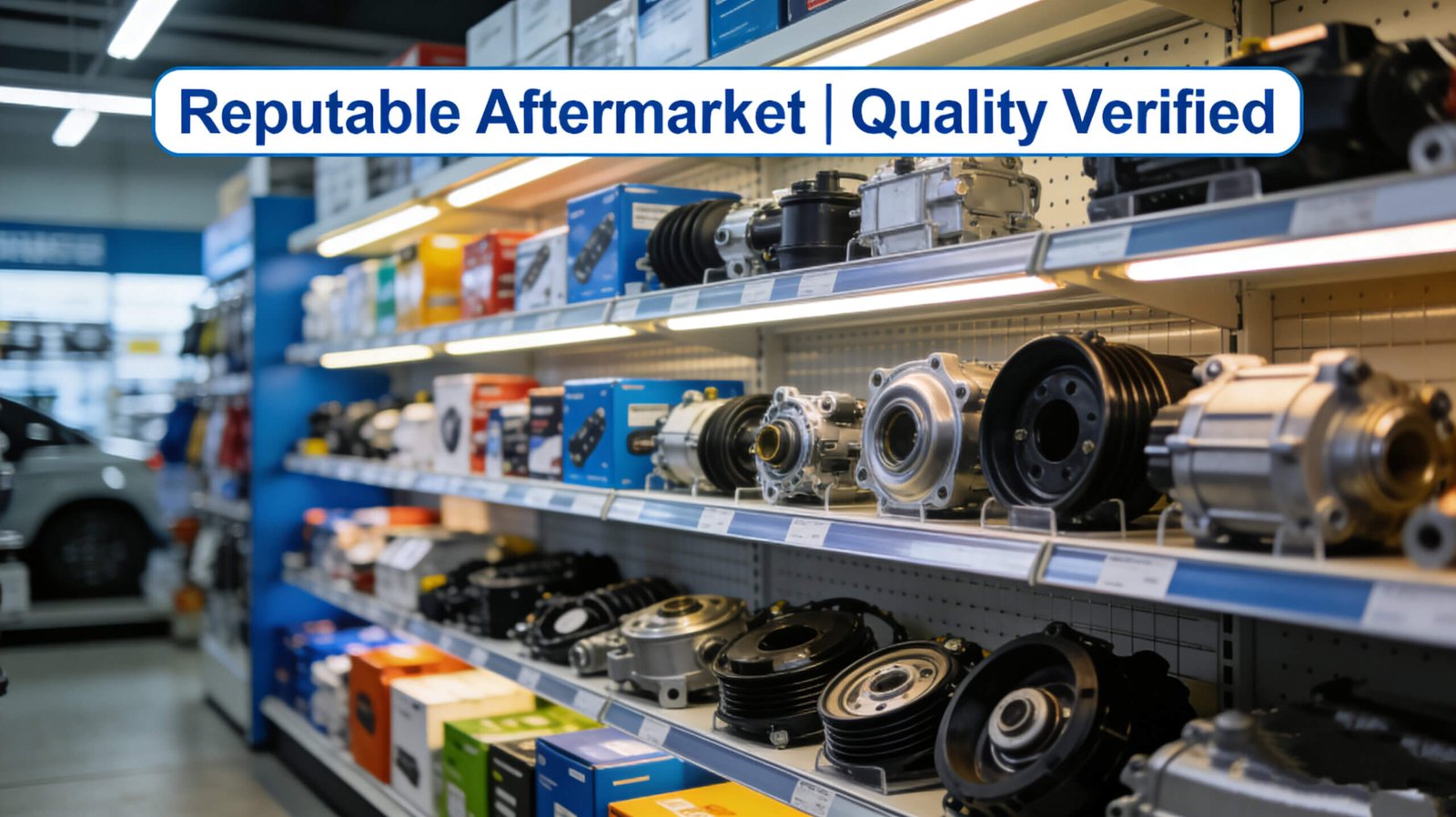
Best Place to Buy Tesla Parts
Why the Official Route Is Not Automatically the Best Answer for Every Market
The official route has real value. For certain use cases, it matters a great deal. Official catalog logic, fitment confirmation, and part number accuracy are important, especially when buyers need to reduce mismatch risk.
Still, the existence of an official route does not mean every regional purchasing problem is solved. Buyers can review Tesla’s official Parts Catalog, check the Tesla EPC catalog, and review Purchasing Parts and Tools information, but that does not automatically create a stable local supply route for every repair market.
In a market with strong infrastructure, better official access, and a more mature service footprint, the official route may indeed be the best place to buy Tesla parts for many scenarios. In a market where the local network is still developing, the problem is broader than identification. The problem is whether parts can be sourced consistently, replenished efficiently, combined into workable mixed orders, and integrated into a repair rhythm that makes business sense.
That is where many buyers make a mistake. They confuse official with universally practical.
For certain OE-sensitive situations, official sourcing logic matters. But for repair shops, body shops, and distributors still trying to build a workable aftermarket structure, practical questions usually matter more. Can the supplier support fast-moving repair categories? Can it handle repeat replenishment? Can it support testing rather than forcing a full-range commitment too early? Can it help the buyer avoid inventory mistakes while the local market is still taking shape?
That is why the best place to buy Tesla parts is not a branding question. It is a fit question.
What a Reliable Tesla Parts Supply Route Should Actually Be Able to Do
If a buyer is seriously evaluating the best place to buy Tesla parts, website design should not be the focus. Capability should.
A reliable supply route should first support practical judgment. Tesla parts are not a category that should be handled casually. Model, year, version, and part-number logic matter. A serious supplier should understand the difference between simply listing products and helping buyers reduce misorder risk.
If your team is still building that capability, it helps to work from a stronger technical base. Resources such as a Tesla parts catalog guide or a practical Tesla part number search workflow can make early-stage sourcing much more controlled.
Second, a supply route should be able to deliver consistently rather than occasionally. A supplier that can fulfill one order is not automatically useful. A supplier that can support the second, third, and fifth replenishment is much closer to becoming a real long-term route.
Third, it should serve the repair market rather than only consumer accessories. Repair demand is shaped by fast-moving maintenance parts, post-warranty replacement parts, and collision-support parts. That is why buyers often end up comparing not just product range, but sourcing depth across categories such as Tesla body parts, structural repair items, and other workshop-driven lines.
Fourth, it should support mixed orders and staged market development. Most underdeveloped Tesla after-sales markets should not begin by loading a massive SKU range. A much smarter path is to start with practical, high-frequency categories, learn replenishment patterns, and expand gradually. The right supplier should understand that kind of growth logic.
Fifth, it should be able to manage international shipping and follow-through. Cross-border supply is not finished once a quotation is accepted. The part has to reach the buyer reliably, and the process must be repeatable enough to support future orders. In many markets, that matters more than the first quoted price.
This is exactly why buyers in developing Tesla after-sales markets increasingly pay attention to suppliers such as Kylin EV Parts. The reason is not just product availability. It is because a company like Kylin EV Parts fits more naturally into the real commercial problem these buyers are trying to solve.
Rather than treating Tesla parts as a simple online retail category, Kylin EV Parts is better understood as a one-stop EV parts supply partner for distributors, repair shops, and body shops that are trying to build actual aftersales capability in markets where local supply is still unstable. That difference matters. A workable supply route is not just about having a catalog. It is about having access to the right repair categories, practical support for replenishment, and a supplier that understands how Tesla aftersales demand develops in the real market.
Which Tesla Parts Make the Best First Step
One of the biggest mistakes buyers make is trying to begin with everything.
That is the wrong logic for an underdeveloped market.
The stronger approach is to begin with categories that are fast-moving, repair-driven, and manageable from an inventory perspective. Brake pads, brake discs, cabin filters, control arms, wheel bearings, suspension links, and bushings are often better starting points because the demand is real, the use case is clear, and replenishment is easier to build into a routine.
A second layer includes common small-fault repair items such as door handles, door lock actuators, selected sensors, and selected electrical repair parts. These items often match real workshop demand more closely and help local repair channels gain practical experience quickly.
A third layer includes collision-support categories. Lamps, brackets, liners, undertrays, clips, seals, and selected bumper-related items are often more important than chasing large flagship parts too early. What slows collision work is often not one dramatic component, but an incomplete package and slow secondary replenishment.
This is another area where Kylin EV Parts can be positioned naturally in the discussion. Suppliers with real market feedback are usually more useful than suppliers that simply have long product lists. Buyers exploring longer-term EV category development often also review broader sourcing perspectives, such as Tesla’s wholesale parts strategy and model-specific sourcing logic.
Instead of pushing buyers to load everything at once, a more workable approach is to start with fast-moving repair categories, validate demand, learn replenishment patterns, and expand gradually. That is a more commercial way to enter the Tesla aftermarket.
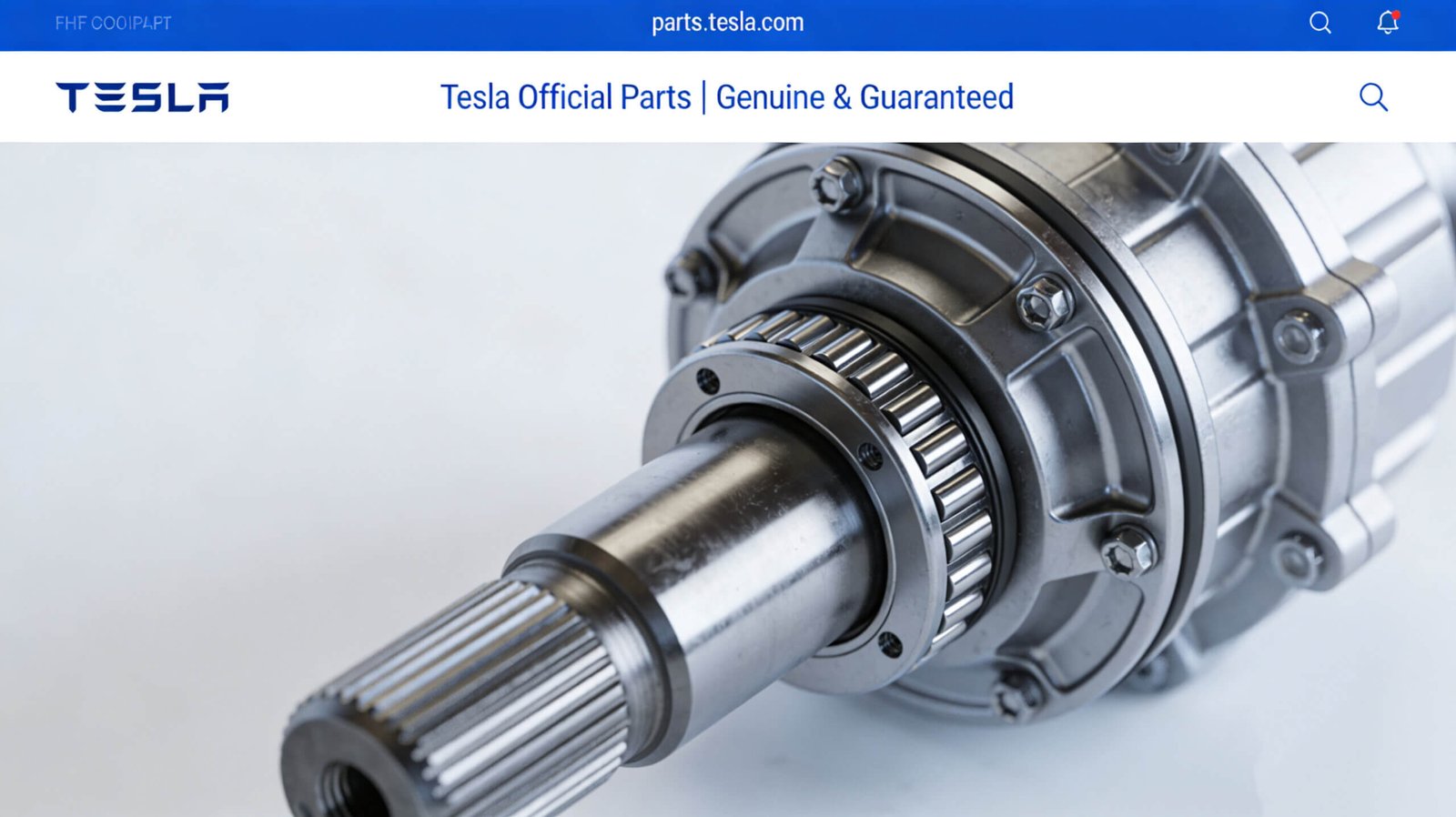
Best Place to Buy Tesla Parts
How to Tell Whether a Supplier Is Just Selling or Can Actually Support Growth
A large number of buying mistakes happen because the supplier can quote, but cannot actually support the business.
A real long-term supplier should understand Tesla’s parts logic instead of merely forwarding a catalog. It should understand repair demand instead of focusing only on consumer accessories. It should be able to suggest practical starting categories instead of pushing an unfocused range. It should think in terms of continuity, not just one shipment. It should also be able to support the real buying behavior of distributors, body shops, and independent repair channels, including mixed orders, test orders, replenishment, and category expansion.
That is why suppliers like Kylin EV Parts are becoming more relevant in these markets. Kylin EV Parts is not simply positioned as a seller of Tesla parts. It works more credibly as a one-stop EV parts supplier supporting distributors and repair channels with fast-moving categories, practical supply coordination, and international shipping support.
For a market where Tesla demand is rising but the local parts network is still thin, that cooperation model is usually more useful than working with a supplier focused only on one-time transactions.
The best place to buy Tesla parts is not simply the cheapest source. It is not the loudest brand. It is not the website that looks most global. It is the source that reduces misorder risk, lowers the probability of stock gaps, improves repair closure, and helps the buyer build a real local Tesla after-sales capability.
The Real Answer: The Best Place to Buy Tesla Parts Is Not One Website, but One Workable Supply Route
Once the issue is viewed clearly, the conclusion becomes simple.
If a buyer operates in a market with strong infrastructure, broad official access, and a mature local distribution system, then the best place to buy Tesla parts may indeed come down to platform and price comparison.
But if the market is still in the stage where Tesla population is rising, repair demand is rising, and the local parts network is still immature, then the best place to buy Tesla parts is not really a website question at all.
The real issue is who can provide a stable supply, who can reduce misorders and stockouts, who can support collision closure, and who can help repair shops, body shops, importers, and distributors build a practical after-sales route from the ground up.
In that kind of market, the best place to buy Tesla parts is never just the most famous name. It is the supply route that actually works in the market.
That is also why companies such as Kylin EV Parts fit naturally into this conversation. For buyers trying to build a workable Tesla parts route in developing after-sales markets, the goal is not simply to find more websites. It is to find a supplier that understands repair demand, supports sustainable replenishment, and can grow with the market. A supplier like Kylin EV Parts becomes relevant not because of loud claims, but because it aligns with what these markets actually need: one-stop EV parts coverage, fast-moving repair categories, mixed-order flexibility, and long-term supply support.
Buyers should also pay attention to how local service networks differ by country. Reviewing Tesla’s Find Us network can help teams understand how service-center and collision-center coverage varies by market, which directly affects how much local aftermarket support may be needed.
Final Thought
In markets where Tesla numbers are rising but the local parts network is still immature, the real need is not more websites. The real need is a more reliable supply route.
For an independent repair shop, it determines whether vehicles leave the bay on time. For a body shop, it determines whether Tesla collision demand can actually be absorbed. For importers and distributors, it determines whether Tesla’s aftermarket becomes a durable business line or just a passing idea.
So the correct answer to the best place to buy Tesla parts is not always official. It is not always the cheapest. It is definitely not always the noisiest platform.
The correct answer is the route that makes repair, replenishment, and business growth actually work in the market.
And in exactly that kind of market, suppliers such as Kylin EV Parts are worth serious attention, because they are positioned not just to sell parts, but to help buyers build a practical Tesla after-sales path that can grow over time.