Tesla Wholesale Parts: How Distributors Build a Profitable EV Parts Business
Many buyers enter the market for Tesla wholesale parts with a simple set of questions. They want to know the price, the minimum order quantity, and the lead time. Those questions matter, but they rarely determine whether the business will still be growing six months later.
What matters far more is whether the parts are matched correctly, whether replenishment stays stable, whether after-sales losses remain under control, and whether the supplier understands how the local market actually works. A distributor, an importer, a repair network, and an online seller may all buy Tesla wholesale parts, but they do not build their business in the same way. The strongest aftermarket businesses are not built on one cheap first order. They are built on repeatable product logic.
That is why serious buyers no longer treat Tesla wholesale parts as a simple sourcing exercise. They treat it as a commercial structure decision. The real question is not whether the Tesla wholesale parts exist. The real question is which Tesla wholesale parts should come first, which Tesla wholesale parts are safe for trial orders, which categories need stricter OE matching, and which product groups fit the stage of the local market.
At Kylin EV Parts, we approach the business from that angle. Instead of pushing the same list into every country, we prefer to help customers build a starter basket based on vehicle population, warranty stage, repair ecosystem, and sales channel.
If you have already explored our pages on Tesla parts catalog lookup or Tesla mirror parts, you will have seen the same pattern. In the real Tesla aftermarket, the barrier is rarely access to parts alone. The real barrier is the ability to match, filter, and supply them in a commercially sustainable way.
The Opportunity Is Different in Every Country Because Every Tesla Market Is at a Different Stage
One of the biggest mistakes in the EV aftermarket is assuming that every country is ready for the same SKU strategy. That is not how the market works. Some countries already have a large installed base, a visible post-warranty wave, and strong demand for Tesla wholesale parts.
Some are only entering the early growth phase, where high-frequency maintenance items make more sense than complex accident repair categories. Others do not have a strong official Tesla service structure at all, but because vehicles enter through parallel imports, salvage channels, or regional circulation, the aftermarket becomes essential much earlier.
That means the right Tesla wholesale parts strategy for the United States is not the same as the right strategy for Norway, the United Kingdom, Georgia, Brazil, or Saudi Arabia.
Take the United States first. This is a market with large vehicle volume, a broad repair ecosystem, and a growing population of Teslas that have already moved into a more mature service cycle. In that environment, accessories can still sell, but they are no longer enough to define the business.
The stronger long-term categories are brake pads, brake discs, filters, suspension arms, lamps, mirror assemblies, and selected body parts. A distributor in this kind of market needs more than lifestyle add-ons. They need a product structure that supports actual workshop demand.
Norway offers a different but equally important lesson. It is one of the earliest mature Tesla markets in Europe, and many early Model S and Model 3 vehicles are already well into the post-warranty period. In that kind of market, Model 3 and Model Y can provide the base sales volume, but older Model S items such as door handle repair kits, lamps, and suspension components often deliver stronger margins.
A serious Tesla wholesale parts strategy in Norway should not rely only on popular accessories. It should combine high-frequency maintenance parts with older-model repair categories that offer better profitability.
Canada has another pattern. Official service points exist in major cities, but winter conditions amplify demand in categories linked to suspension, HVAC systems, and glass-related maintenance. Once vehicles move beyond warranty, many owners no longer want to absorb the cost of staying fully inside the official service system. That creates room for the aftermarket. For this type of market, filters, wipers, brake parts, and suspension-related items are often the right starting point.
Germany, the UK, and the Netherlands sit closer to the rising post-warranty phase. Official sales and service networks are present, but large numbers of 2019 to 2021 vehicles are now moving toward a more active aftermarket cycle.
For buyers in these markets, the smart move is not to launch a full-range catalogue immediately. It is to start with a minimum executable basket of high-frequency items such as brake pads, brake discs, HVAC filters, wiper sets, and control arms. Once turnover becomes visible, it becomes much safer to add lamps, mirrors, and selected body repair items.
The UK adds another important variable because it is a right-hand-drive market. That changes the matching discipline completely. A supplier cannot safely sell a generic Model 3 headlamp or a vague Model Y mirror without checking region-specific and steering-specific fitment. In other words, Tesla wholesale parts in right-hand-drive markets are not only about product range. They are about precision.
Then there is a category of markets that many traditional suppliers underestimate, even though the aftermarket opportunity is strong. Georgia is a good example. Vehicles often enter through US salvage auctions, parallel import channels, or regional resale flows.
Official warranty support is limited or practically irrelevant, and local repair operations depend heavily on aftermarket supply. In this kind of environment, the aftermarket is not a secondary option. It is often the functional service chain. Accident repair parts, lamps, suspension parts, body parts, mirror assemblies, and cooling-related items can make much more sense than leading only with accessories.
Brazil is another interesting case. It may not look like a classic mature Tesla market, but it can still be commercially attractive because repair tickets are relatively high, and niche margins can be stronger. In that type of market, the right entry point for Tesla wholesale parts is often standardised repair items and higher-value replacement parts rather than a copied accessory-led strategy from North America or Western Europe.
Saudi Arabia, Israel, and Turkey represent another phase again. These are markets where the full post-warranty wave may still be ahead, but good distributors do not wait for the demand peak before building supplier relationships. In early or fast-growing markets, filters, wipers, brake parts, and easy-to-ship maintenance items are often the right first step. They build trust, prove supply capability, and create a clean path toward deeper repair categories later.
This is why the best businesses in Tesla wholesale parts do not begin with a full catalogue and a vague ambition to sell everything. They begin with the stage of the market.
In Tesla Parts Sourcing, Matching Is Usually a Bigger Risk Than Pricing
Many new entrants assume that once the vehicle model is correct, the Tesla wholesale parts are probably correct as well. That assumption creates some of the most expensive mistakes in the business.
Tesla parts sourcing is difficult because many items cannot be identified safely by broad product names alone. A Model Y part may still vary depending on production year, pre-facelift or facelift generation, ECE or US version, left-hand-drive or right-hand-drive configuration, and OE supersession history. Two parts may sound identical in a quotation, yet arrive with different connection points, mounting details, or regional specifications.
That is why any serious Tesla wholesale parts supplier needs to cross-check OE reference, VIN, model year, regional version, and, where needed, actual part images instead of rushing through a generic quotation.
A simple example makes this clear. If a buyer asks for a front wheel bearing, almost any seller can reply with available stock. But if the sourcing process goes one step further and confirms an OE reference such as 6007040-00-A, the transaction becomes much safer. The same logic applies to HVAC filters. Saying cabin air filter is convenient, but quoting and replenishing against a reference such as 1107681-00-C reduces ambiguity across markets, teams, and languages. Wiper sets follow the same pattern. A code such as 1076730-00-C is more reliable in wholesale communication than a vague phrase such as Model 3 or Model Y wiper set. The risk becomes even greater with lamps.
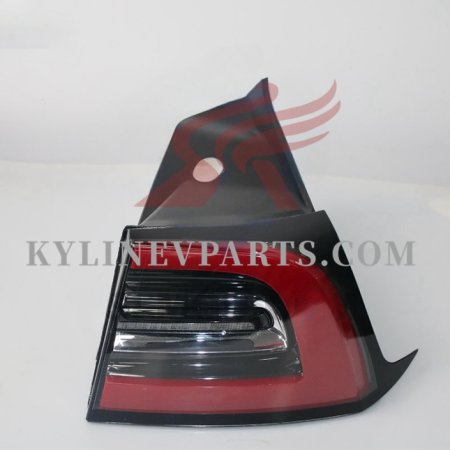
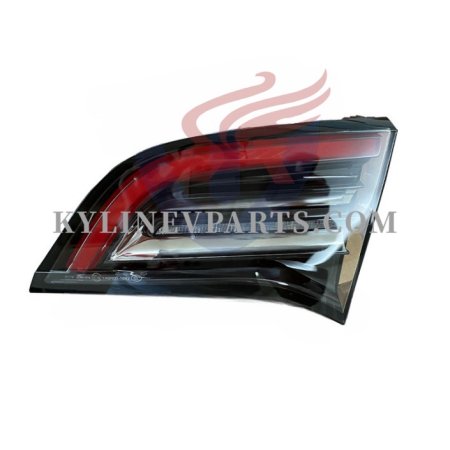
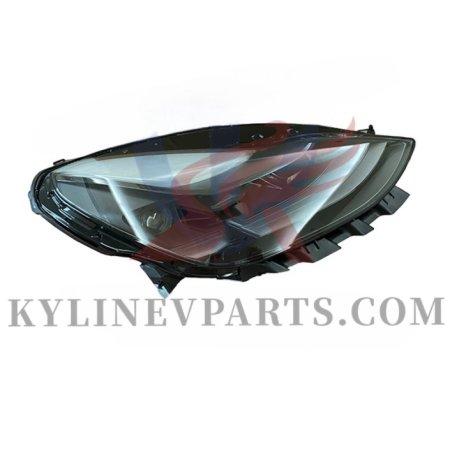
A specific headlamp reference, such as 1077376-00-C, is much safer than simply saying right headlamp for Model 3, because lighting assemblies are often affected by region and version differences.
The commercial logic is simple. Distributors rarely fear paying slightly too much. What they really fear is buying the wrong batch. Once that happens, the problem does not end with one return. It turns into dead stock, customer complaints, workshop delays, lost confidence, and slower repeat business.
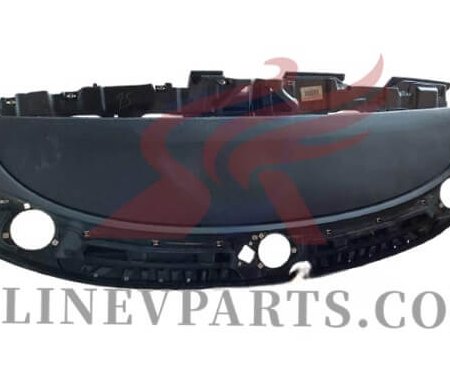
This is why Kylin EV Parts puts matching discipline ahead of fast but vague quotation. A quotation that looks quick on day one is not the same as a supply chain that stays stable after the first order. If your business also touches body panels or repair categories, you may also want to review our Tesla body parts guide. Once a distributor moves into lamps, trim, and body panels, details such as clips, tolerances, coating quality, and anti-scratch packaging matter more than a low headline price.
For reference and OE verification, many buyers also use the Tesla electronic parts catalog as part of their checking process before placing larger orders.
The Best Starter SKUs Are Usually Not the Hottest Products but the Ones That Are Easiest to Execute
When buyers ask for Tesla wholesale parts, they often want a full hot-selling list immediately. That request is understandable, but it can create another problem. A product may look attractive in theory while still being the wrong item for a first-stage distribution plan.
For most buyers entering Tesla wholesale parts for the first time, the best opening range is usually not the largest or most complicated category. It is the category with stronger standardisation, safer shipping characteristics, clearer matching logic, and steadier repeat demand. Cabin filters, HVAC filters, wiper sets, brake pads, brake discs, suspension arms, and door handle repair kits for older Model S vehicles are strong examples. These are easier to test, easier to replenish, and more suitable for building the first repeat-order rhythm.
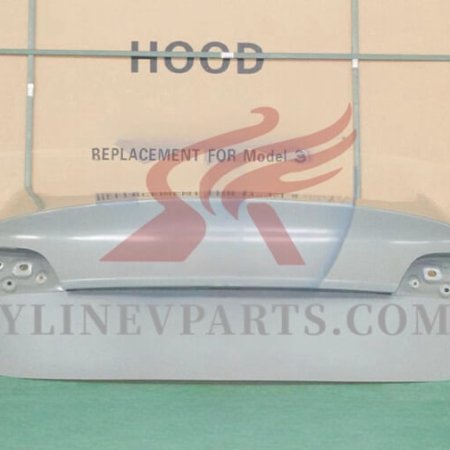
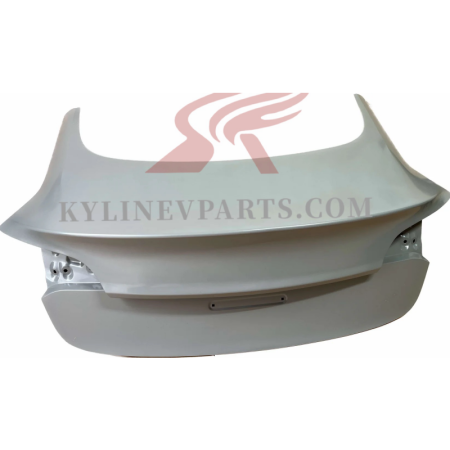
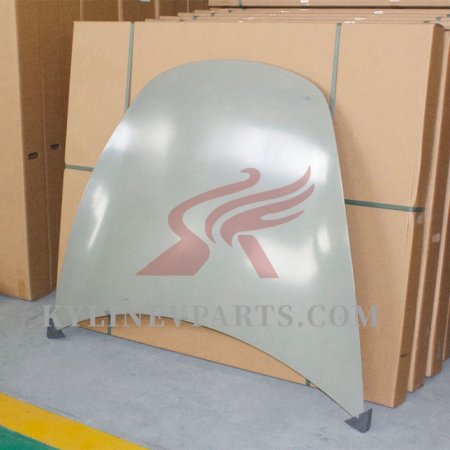
Once a distributor has established real workshop-side demand, it becomes much safer to add lamps, mirror assemblies, cooling-related items, and selected accident repair products. If the buyer already has warehousing capability, local repair partnerships, or an accident-repair channel, then larger products such as bumpers, fenders, hoods, trunk lids, and larger body panels can begin to make sense.
Many suppliers still present accessories as the only practical entry point. Accessories do have value, especially for online channels, but they are also more transparent and easier to compete on. Replacement parts create stronger barriers because they depend on matching accuracy, continuity of supply, after-sales handling, and better commercial judgment. In that sense, a mature Tesla wholesale parts business is not a competition in who can sell the cheapest item. It is a competition to see who can build a better supply structure around real repair demand.
A Good Tesla Wholesale Supplier Adds Value Beyond Shipping Boxes
When overseas buyers compare suppliers, one issue is often overlooked. Not every company that has Tesla wholesale parts is suitable for long-term cooperation.
Some factories are only strong in one category. Some suppliers look competitive on the first order, but cannot support replenishment well. Some can sell accessories but struggle with matching replacement parts. Others appear to offer a broad range, yet do not understand the difference between serving distributors, online sellers, and repair networks.
A supplier that is genuinely suitable for Tesla wholesale parts should offer more than inventory. It should have enough SKU depth to support channel growth. It should understand fitment, packaging, and after-sales risk. It should be able to support trial orders, mixed orders, repeat orders, private-label packaging, and gradual category expansion. Most importantly, it should understand the buyer’s route to market.
This is where Kylin EV Parts differs from a narrow single-category source. We not only provide a deep range of Tesla wholesale parts. We also focus on the commercial process around them, including hot-selling SKU recommendations, OE and VIN matching support, mixed wholesale supply, packaging options, and repeat replenishment. For buyers who want to move beyond simple trading and closer to repair capability, we can also support cooperation around Tesla repair training, diagnostics, and calibration-related needs.
That matters because the buyer is not only trying to purchase products. They are trying to make the local aftermarket work.
Conclusion: Tesla Aftermarket Success Is Not a Low-Price Game but a Judgment Game
In the end, Tesla wholesale parts are not won by the supplier that offers the lowest first quote. It is won by the distributor who understands which market stage they are in, which SKU group should come first, how matching risk should be controlled, and which supplier can keep the business stable after the first order.
In mature post-warranty markets, maintenance, wear-and-tear, and accident-repair parts create stronger barriers than a pure accessories strategy. In rising post-warranty markets, a high-frequency standard basket is often the most sensible entry point before moving into lamps and suspension categories. In parallel-import or no-official-support markets, the aftermarket is often not a secondary option at all. It is the practical foundation of local repair. In early-growth markets, the priority is not to list every SKU immediately. It is to secure channel relationships and product recognition before the demand wave accelerates.
That is the commercial reality behind Tesla wholesale parts. It is not a market driven by luck or one-off quotations. It is a market where profits come from structure, matching discipline, and supply-chain coordination.
If you are evaluating which Tesla wholesale parts to introduce first in your market, or you are looking for a partner better suited to distribution, repair networks, or online resale, Kylin EV Parts can help you build a more workable long-term approach, from market-stage judgment and starter basket planning to OE and VIN matching and repeat supply.