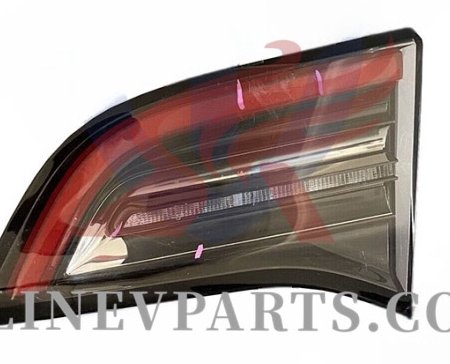
Looking for Reliable Tesla Car Parts Suppliers? Here’s What You Need to Know! Technical Standards + After-Sales Guarantee
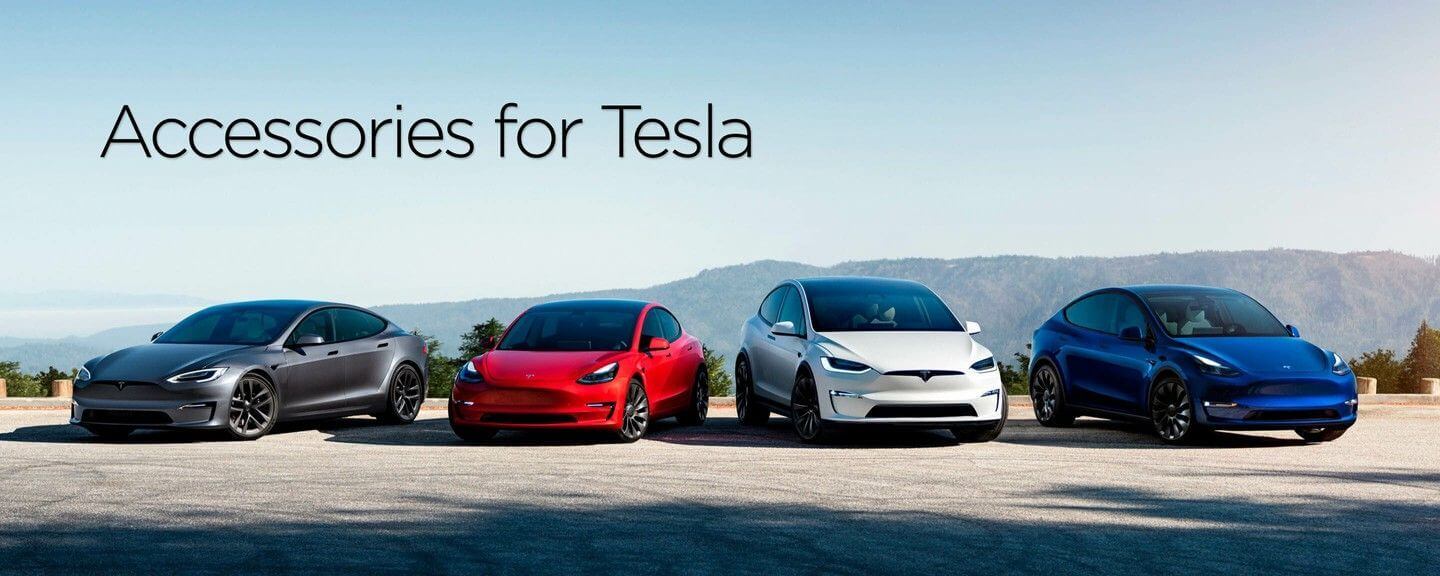
Last year, a Tesla repair shop in Chicago received a batch of headlights that did not meet the required standards, resulting in significant losses: these parts failed the local safety inspection, causing 12 Tesla Model 3 owners to wait over two weeks for repairs. The shop also faced a $5,000 fine for using unapproved car parts. Unfortunately, this is not an isolated case. For businesses in North America, Europe, and other global markets involved in Tesla parts, finding reliable suppliers means more than just obtaining usable parts—it’s about minimizing risk, complying with local regulations, and ensuring long-term operational stability.
The challenge in procuring Tesla parts lies in the fragmented industry: some suppliers claim to offer “OEM-quality” parts but lack key certifications; others may offer fast delivery, but disappear when post-sale issues arise. For purchasing teams, repair shops, or distributors targeting the North American and European markets, the key to choosing a supplier rests on three hard criteria: compliance with international technical standards (especially mandatory car parts certifications), visible brand strength with offline support, and robust after-sales services. This article breaks down how to evaluate these dimensions and their importance for your business.
1. Technical Standards: Mandatory Certifications and Core Standards are a Must
For Tesla parts, especially safety-critical components such as headlights, taillights, and braking systems, “meeting technical standards” is not just a slogan, but a legal requirement for entering markets like North America and Europe. Here are two crucial certifications that Tesla car parts suppliers must have:
1.1 Mandatory Certifications for Tesla Car Parts
- DOT Certification (U.S. Department of Transportation): Parts sold in the U.S., such as headlights, mirrors, and tires, must bear the DOT mark. This certification ensures that parts meet stringent safety standards. For example, Tesla Model Y headlights must pass beam mode tests (to prevent blinding oncoming vehicles) and extreme temperature tests (to withstand environments ranging from -40°C in Minnesota to 49°C in Arizona). Without DOT certification, parts may be seized at U.S. ports—over 5,000 batches of non-DOT certified car parts were intercepted by U.S. Customs in 2023 (source).
- E-Mark Certification (European Economic Commission): For markets like the EU, the UK, and Norway, E-Mark certification is mandatory. Unlike DOT, E-Mark comes with different categories. For example, headlights typically require E1 (Germany), E4 (Netherlands), or E9 (Spain) certification. E-Mark also covers electromagnetic compatibility (EMC), ensuring Tesla headlights do not interfere with a vehicle’s ADAS (Advanced Driver Assistance Systems), a requirement strictly enforced by European regulators.
Reliable Tesla car parts suppliers not only possess these certifications but also provide convenient verification methods—such as offering electronic versions of DOT/E-Mark certificates that can be cross-checked in official databases like NHTSA (U.S.) or UNECE (Europe).
1.2 Tesla Parts Exclusive Standards
Certification is just the foundation; premium suppliers also adhere to Tesla’s exclusive engineering standards. For instance:
- Tesla Model 3 Headlights: Tesla demands a color temperature of 5000K (matching the original headlight color) and a lifespan of over 2000 hours. Even if a supplier meets DOT standards, using low-quality LED chips may fail to meet these durability requirements, leading to customer complaints.
- Battery Cooling Parts: Tesla requires a leakage rate below 0.1 cubic centimeters per minute at 689 kPa. Suppliers with in-house pressure testing labs (rather than relying on third parties) are more likely to meet this standard consistently.
2. Brand Strength and Offline Presence: Trust Signals from Global Partners
In Western markets, the brand reputation and offline presence of suppliers are just as crucial as technical specifications. Here’s why:
2.1 Why a Recognizable Brand Matters
Suppliers with registered trademarks (as opposed to unbranded manufacturers) are more reliable because they have stronger accountability. For example, a European Tesla parts distributor in Berlin would rather collaborate with a brand-name supplier than with a no-name parts manufacturer. The reason: brand suppliers need to maintain their reputation and are less likely to cut corners on quality—one recall can damage a brand’s value.
Unbranded suppliers often lack traceability. If a batch of Tesla taillights is defective, a brand-name supplier can trace the production batch, notify affected customers, and quickly send replacements. In contrast, an unbranded supplier might not have records, making it impossible to determine which customers received faulty parts.
2.2 Offline Stores: More than Just “Parts Buying Locations”
For businesses in North America and Europe, having an offline presence can provide practical benefits:
- Instant Access in Emergencies: If a repair shop in Dallas urgently needs a headlight for a Tesla Model X, waiting for three days of shipping isn’t an option. If the supplier has an offline store in Houston (a 4-hour drive away), the repair shop can pick up the part the same day—something online-only suppliers can’t offer.
- On-Site Verification: European distributors in Paris often visit local warehouses (such as one in Lyon) before placing large orders. They inspect packaging, test headlight samples, and meet the local team—trust that cannot be built via email alone.
- Localized Support: Suppliers with stores in Munich can provide face-to-face technical training for German repair shop staff, helping them install Tesla adaptive headlights properly. While online suppliers may offer video guides, in-person training reduces installation errors.
Examples of strong offline networks include suppliers with stores in core hubs like Los Angeles, Chicago, and New York in the U.S., and Berlin, Paris, and Madrid in Europe.
3. After-Sales Support: Regional Warranty Periods and Their Importance
In the Tesla parts industry, poor after-sales support can ruin your business. But even high-quality support is useless if it doesn’t comply with regional regulations. Warranty periods differ from country to country, and suppliers must meet these local requirements to build long-term global partnerships.
3.1 Warranty Periods in Key Markets
Warranty requirements are often mandated by law, not just “customer service perks.” Here are some examples of mandatory warranty periods for Tesla parts:
- Norway: As one of Europe’s strictest consumer protection markets, Norway mandates a minimum 5-year warranty for car parts (including Tesla parts) under the Consumer Protection Act (Forbrukerloven). For example, if a Tesla battery charger sold in Oslo fails after 3 years, the supplier must replace it for free with no exceptions.
- EU (Germany, France, Spain): The EU Consumer Rights Directive requires a statutory 2-year warranty on all consumer goods, including Tesla parts. However, many markets voluntarily extend this period: German suppliers often offer 3-year warranties, while French repair shops prefer 2.5 years to meet local customer expectations.
- U.S. and Canada: No federal mandatory warranty for car parts, but market standards have become established. U.S. repair shops typically require 18-24 months of warranty for Tesla parts (e.g., headlights, brake pads), while Canadian companies often demand 24-month warranties to comply with provincial consumer laws (such as the Ontario Consumer Protection Act).
- UK: Post-Brexit, the UK retains a 2-year statutory warranty under the Consumer Rights Act 2015. For high-value Tesla parts (e.g., infotainment screens), distributors often seek 3-year warranties to reduce resale risks.
3.2 The Importance of Warranty Flexibility
If a supplier offers a standard 12-month warranty, they will run into problems in markets like Norway (where 5 years are required) or Germany (where 3 years are expected). The consequences can include:
- Legal Penalties: In Norway, a supplier refusing to honor a 5-year warranty could face fines from the Norwegian Consumer Authority (Forbrukertilsynet) and lose the ability to sell in the country.
- Lost Business: U.S. distributors will abandon suppliers offering only 12 months of warranty—customers in repair shops expect warranties of 18 months or more, and switching suppliers is easier than dealing with customer complaints.
- Damaged Reputation: If French repair shops use parts with only 12 months of warranty (instead of the expected 2.5 years), customers will blame the repair shop, not the supplier, leading to lost business.
3.3 What “Good After-Sales” Means for Global Partners
In addition to meeting warranty periods, top suppliers add value through localized support:
- Clear Warranty Terms: Reliable suppliers provide clear written terms, such as “5-year warranty in Norway (per Consumer Protection Act), 3-year warranty in Germany, 24-month warranty in the U.S.,” with no fine print or sudden changes.
- Fast Claims Process: If a repair shop in Norway needs to replace a faulty Tesla sensor, the supplier should approve the claim within 48 hours and send a replacement part via DHL (to avoid long wait times in remote areas).
- Localized Problem Resolution: If a Spanish distributor receives Tesla parts with incorrect voltage (EU standard 230V, but 110V instead), a quality supplier will quickly send a replacement and cover the return shipping costs.
4. How to Select Suppliers: A 4-Step Checklist for Global Buyers
Now that you understand the evaluation criteria, here’s how to execute:
- Verify Certifications First: Request DOT/E-Mark certification documents and cross-check them in official databases (NHTSA for DOT, UNECE for E-Mark). Avoid suppliers who only provide “certification screenshots” without valid serial numbers.
- Check Warranty Match: Ask, “What are your Tesla parts warranty periods in Norway, Germany, and the U.S.?” A trustworthy supplier will give a clear answer that complies with local laws/standards, rather than vague promises like “long-term warranty.”
- Evaluate Brand and Offline Presence: Search for the supplier’s brand online—do they have a professional website? Is their offline warehouse/store listed on Google Maps? For suppliers claiming to serve Europe, they should have a physical warehouse in the region (not just a “virtual office”).
- Start with a Small Test Order: Before placing a large order, purchase 5-10 parts (e.g., headlights) to test the quality, logistics speed, and warranty response time. If a sample part fails, observe how quickly the supplier handles the claim—it reflects their true after-sales capabilities.
5. About Kylin EV Parts: Your Trusted One-Stop Tesla Car Parts Supplier
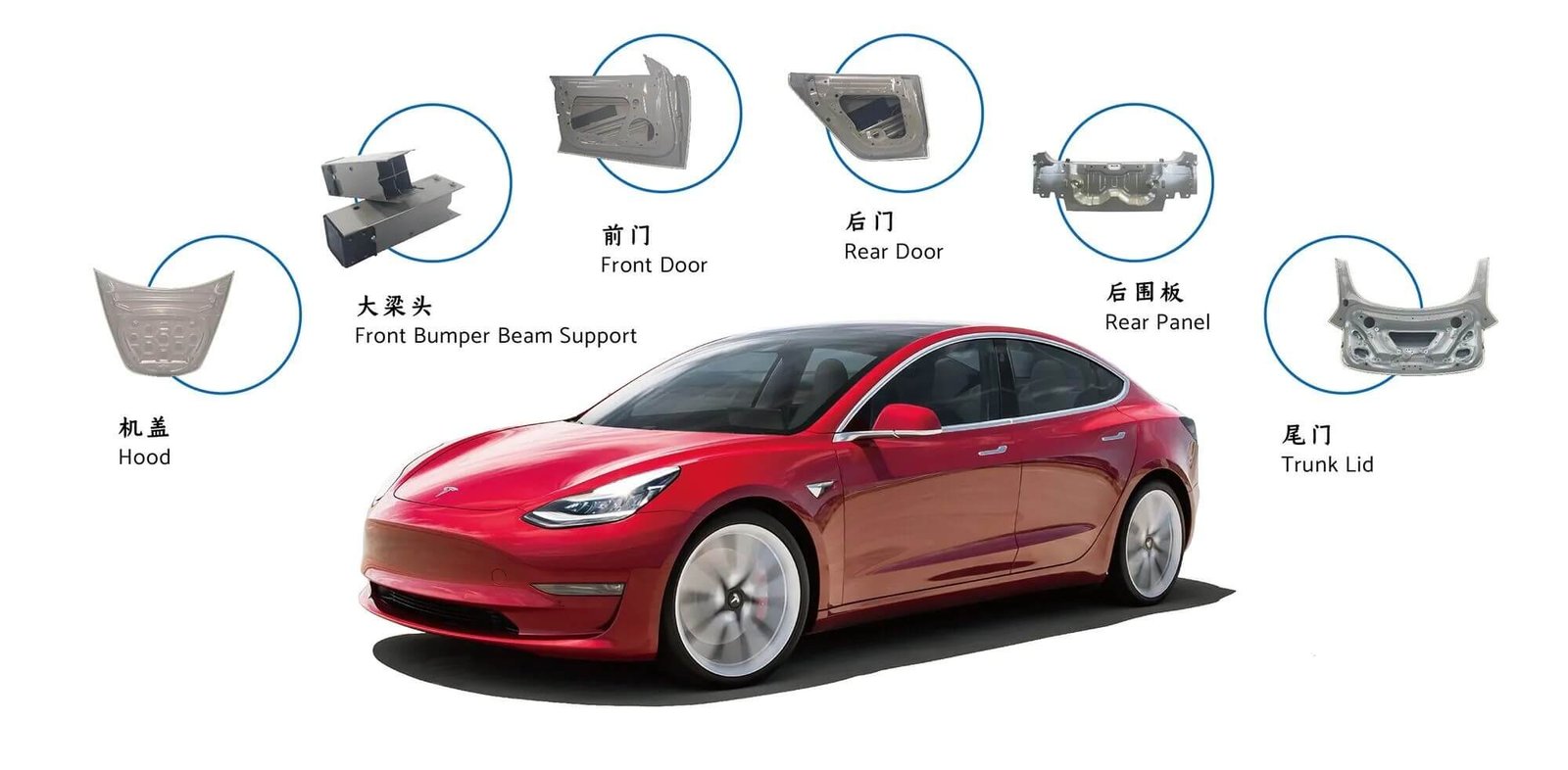
Among the reliable Tesla car parts suppliers meeting global standards, Kylin EV Parts stands out as China’s largest one-stop electric vehicle parts supply chain. Our core advantages align closely with the “reliable supplier” standards discussed in this article, demonstrated in three key areas:
5.1 Solid Domestic Foundation
We have well-known brands and over 100 offline franchise stores across China, offering face-to-face support, parts verification, and rapid pickup services. Additionally, we have over 1,600 warehouse locations with more than 1,600 different types of Tesla aftermarket parts, all meeting strict quality standards (including durability, compatibility, and safety testing). From basic body parts to core electronic components, we cover all after-sales repair needs.
5.2 Global Warehouse Network
To serve the North American and European markets efficiently, we have established physical warehouses in key regions to address cross-border logistics challenges:
- U.S. Warehouse: Located in a logistics hub near major ports like Los Angeles, we can deliver parts to U.S. repair shops and distributors within 2-3 days, avoiding lengthy transatlantic shipping.
- Portugal Warehouse: Covering core Western European markets (Germany, France, Spain, Norway, etc.), we can complete part deliveries within 1-2 days, especially meeting the high-speed requirements of Nordic countries like Norway and Sweden, eliminating concerns over “delays from Asia.”
5.3 After-Sales System Compliant with Regional Warranty Requirements
We understand the regulatory differences in various markets and have tailored our warranty policies accordingly:
- Norway: Strictly follows the Consumer Protection Act, offering a 5-year warranty.
- Germany: Matches local expectations with a 3-year warranty.
- U.S.: Provides a 24-month warranty as per industry standards.
- UK: Retains a 2-year statutory warranty post-Brexit.
Our after-sales team operates according to local time zones (Eastern U.S. Time for North America, Central European Time for Europe), ensuring a 48-hour response for warranty claims, quickly resolving after-sales challenges for our partners.
Whether you’re a repair shop in Oslo, a distributor in Berlin, or a reseller in Chicago, Kylin EV Parts offers a comprehensive, reliable Tesla car parts supply solution with full certifications, flexible warranty policies, and a global warehouse network, becoming your long-term trusted partner.