When Tesla Auto Body Parts Encounter Collisions: The Best Strategies for Repair and Replacement
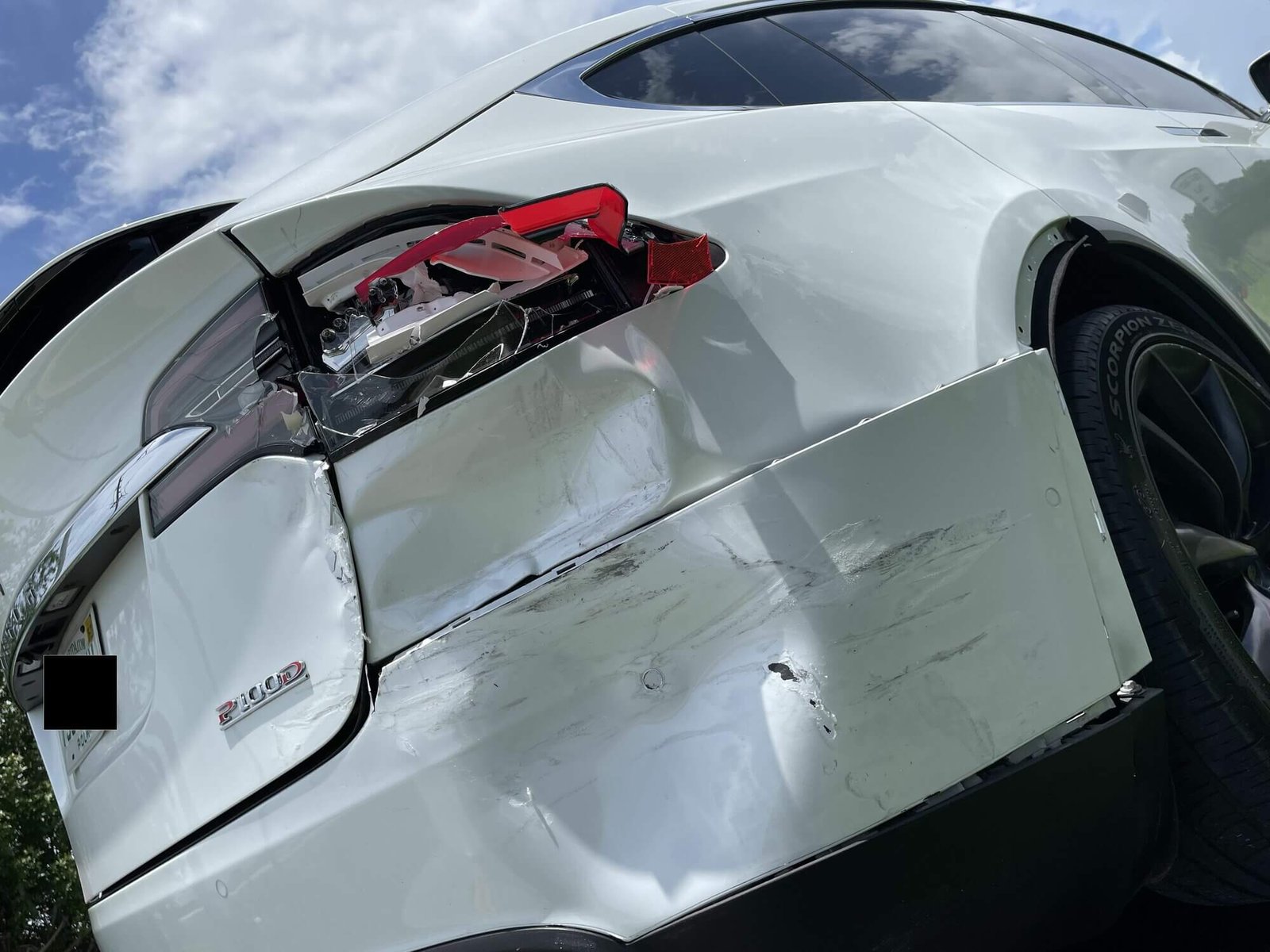
Introduction: Common Dilemmas After a Tesla Auto Body Parts Collision
Tesla has emerged as a leader in the global automotive market, with its innovative technology and distinctive designs in electric vehicles. Its unique body structure utilizes lightweight, high-strength materials such as aluminum alloys and carbon fiber, which significantly contribute to reducing vehicle weight and enhancing battery life. For example, aluminum alloys are about 30% lighter than traditional steel, helping to reduce energy consumption and extend battery range, while carbon fiber materials further optimize vehicle performance with their high strength and low weight.
However, these advanced materials present several challenges when it comes to collision repair and replacement. While aluminum alloys are strong, they have a high memory; once significantly deformed, they are difficult to repair and require specialized equipment and techniques. The repair process is far more complex than with traditional steel. Carbon fiber materials, being more delicate, suffer irreversible damage when the fiber structure is compromised. In such cases, repair is often not an option, and replacement is necessary, which increases both the cost and repair time.
Professional Evaluation Steps for Collided Tesla Auto Body Parts
1. Appearance Damage Detection
Following a collision, the first priority is to conduct a thorough and detailed inspection of the vehicle’s exterior. Professionals typically begin by inspecting the front, followed by the sides, and finally the rear of the vehicle, carefully checking for visible damage such as dents, cracks, or misaligned components.
Even seemingly minor scratches or dents should not be ignored, as they may point to more serious underlying issues. For example, a deep scratch that penetrates the paint on the door could damage the metal layer underneath. If exposed to air, moisture, and contaminants can invade, causing rust and corrosion, which compromises the door’s structural integrity. Similarly, a slight deformation in the bumper may affect how it connects to other parts of the vehicle. Further inspection is needed to check if the clips are broken or the screws are loose.
2. Internal Structure Hidden Danger Investigation
External inspections alone are insufficient to fully assess the damage to the Tesla Auto Body Parts. It’s essential to use specialized equipment to investigate potential internal structural risks.
High-precision measuring instruments, such as 3D coordinate measuring machines, can precisely detect frame deformations. As the vehicle’s key load-bearing structure, the frame’s geometry affects driving stability and handling. Even minor deformations can cause issues such as deviation from the intended driving path or uneven tire wear. X-ray flaw detectors can inspect weld points to ensure that they are not loose or cracked, which is critical for maintaining the vehicle’s structural integrity and occupant safety in the event of another collision.
For instance, the Tesla Model Y’s rear floor is made from a one-piece die-cast structure that integrates several components. Ordinary inspection methods cannot detect potential internal issues; specialized equipment is necessary for accurate detection of hidden deformations or internal stress concentrations.
Criteria for Determining Tesla Auto Body Parts That Must Be Replaced
1. Structural Component Damage
Structural components like the frame and anti-collision beams are crucial for vehicle safety. These parts absorb and dissipate collision energy, protecting occupants.
If the frame is severely deformed—bent or twisted beyond a certain limit—its load-bearing capacity and impact resistance are compromised. Even if repaired, it’s impossible to restore it to its original strength, which can impair the vehicle’s safety in future collisions, requiring replacement.
The anti-collision beam also plays a key role in absorbing impact during a collision. If it’s deformed beyond repair, it will no longer be effective in protecting the vehicle’s main body and occupants, making replacement necessary.
2. Failure of Safety-Related Components
Safety components such as airbag sensors and body stability systems are essential for maintaining the vehicle’s safety performance. A failure in these components significantly reduces the vehicle’s safety.
Airbag sensors monitor the collision’s intensity and angle to determine when the airbags should deploy. A malfunctioning airbag sensor could cause the airbags to deploy incorrectly during minor collisions or fail to deploy in more serious accidents, leaving occupants unprotected.
Body stability system components help the vehicle maintain stability, especially in emergencies. If damaged, these components may not function correctly, increasing the risk of losing control on slippery roads or during sharp turns. These components must be replaced if damaged in a collision.
3. Explanation of Unrepairability of Original Parts
Some Tesla body components, due to their special materials and manufacturing processes, cannot be repaired effectively.
For example, some body panels are made from carbon fiber reinforced composite materials. These materials require complex manufacturing processes, and if damaged, the fiber structure is destroyed. Repairs may not restore the original strength or appearance of the parts.
Likewise, large die-cast body components, like the rear floor of the Model Y, are formed in a single casting process. Once damaged, they cannot be restored using conventional repair methods. Forced repairs may compromise the structural integrity of the component, affecting the vehicle’s safety, so only new parts should be used for replacement.

Cost Comparison and Optimization of Repair and Replacement
1. Cost Differences Between Repair and Replacement of Parts
Let’s compare the costs of repairing or replacing two common components: the bumper and the hood.
For minor bumper damage, such as a small scratch less than 10 cm that doesn’t damage the primer, touch-up painting typically costs $150-$300. If there is a small depression (around 5 cm), non-destructive repair may cost $200-$400. However, if the bumper is severely damaged, with large cracks or severe deformation, replacement costs increase significantly. For a Tesla Model 3 front bumper, the original part costs about $800-$1200, with transportation fees of $50-$100 and installation labor costs of $300-$500. The total replacement cost could be between $1150-$1800.
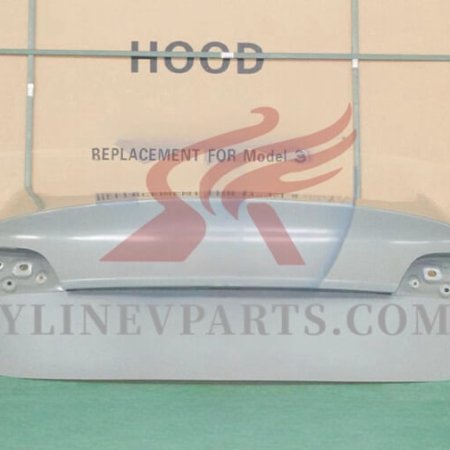
For the hood, if there is a small depression (less than 10 cm²) and no damage to the primer, simple sheet metal repair and local painting cost around $300-$500. However, if the hood is severely deformed, especially if it’s made from special materials like aluminum alloy, the replacement cost can be much higher. For a Tesla Model S aluminum alloy hood, the original part costs about $1500-$2500, with transportation costs of $80-$150 and labor charges of $400-$600. The total replacement cost may range from $1980 to $3250, making it 4-10 times the cost of minor repairs.
2. Cost-Effective Scheme: Key Parts Replacement + Secondary Parts Repair
In some cases, adopting a combination of replacing key safety-critical parts and repairing less important parts can effectively control maintenance costs while ensuring vehicle safety.
For key components like the frame, airbag system, and body stability system, replacement with new original parts is essential, as these components directly impact the vehicle’s safety. On the other hand, minor exterior damages, such as small dents or scratches on the door or bumper, can be repaired if they don’t affect the part’s structural integrity or functionality.
Channels for Tesla Auto Body Parts Repair/Replacement
1. Official Service Centers
Official Tesla service centers provide clear advantages in repair and replacement, including original parts that meet Tesla’s quality standards and are guaranteed to fit properly. Additionally, Tesla’s trained technicians are skilled in diagnosing and repairing issues accurately.
However, official service centers can be more expensive, and the repair process may take longer due to high demand and complex service procedures.
2. Third-Party Authorized Institutions
Third-party authorized institutions, certified by Tesla, offer certain advantages, including lower repair costs and shorter repair times. These institutions can provide original or certified parts and use appropriate diagnostic and repair tools.
However, when choosing a third-party institution, it’s essential to verify their certification and ensure they have the necessary experience and equipment to perform high-quality repairs.
There are several well-known third-party authorized institutions abroad that can provide repair and replacement services for Tesla body parts. Among them, Autoshop Solutions enjoys a high reputation in Europe and America, with an extensive service network to quickly respond to customer needs. The institution is not only equipped with advanced diagnostic equipment but also regularly conducts Tesla-related technical training for technicians to ensure professional maintenance. In terms of accessory supply, Autoshop Solutions can obtain original or certified parts in a timely manner through close cooperation with Tesla, providing strong guarantees for maintenance quality.
Another recommended one is CarService24 from Germany, which has been deeply rooted in the European market for many years and is known for its rigorous maintenance processes and high-quality services. CarService24 has a professional maintenance team with members having rich experience in automobile repair, especially for Tesla models, being able to accurately judge problems with body parts and efficiently carry out repairs or replacements. Its service process is transparent, allowing car owners to keep track of the maintenance progress in real-time, and it strictly controls the quality of accessory procurement to ensure that the parts used meet Tesla’s quality standards.
There is also TeslaRepairPro in the United States, focusing on Tesla car maintenance services. The institution has exquisite technology in body part repair and replacement, ensuring that each repair can restore the vehicle to its best condition through advanced repair techniques and strict quality inspection. TeslaRepairPro maintains close communication with Tesla, enabling it to keep abreast of the latest technical information and accessory supply, providing efficient and reliable services for car owners.
Precautions for Accessory Purchasing
Whether using official service centers or third-party institutions, purchasing quality accessories is crucial to ensuring proper repairs.
Key Indicators to Identify Original Parts:
Packaging: Original parts typically have high-quality, clearly printed packaging with logos, part numbers, and production dates, while third-party parts often come in rough packaging.
Appearance: Original parts are crafted with precision, ensuring smooth, defect-free surfaces, while third-party parts may have rough edges or uneven surfaces.
Material: Original parts meet Tesla’s quality standards and can be tested for toughness and durability, while third-party parts may lack these quality assurances.
Price: If the price is significantly lower than market value, it may indicate that the part is not an original.
Considerations for the Adaptability of Replaced Tesla Auto Body Parts

1. Significance of Adaptability
Well-matched Tesla Auto Body Parts ensure that the vehicle performs optimally, maintains safety standards, and retains aesthetic integrity. Poorly matched parts can lead to increased energy consumption, safety risks, and cosmetic issues.
2. Factors Affecting Adaptability
The matching of parts to the vehicle model is crucial. Tesla vehicles from different production years may have slight variations in their body parts due to design updates or manufacturing changes. Professional installation ensures parts are correctly aligned, reducing risks associated with improper fit.
Recommendation of Tesla Auto Body Parts Manufacturers
Kylin EV Parts specializes in high-quality Tesla Auto Body Parts and other electric vehicles. Using premium materials like aluminum alloys and carbon fiber, they ensure that every part meets Tesla’s performance and safety standards. Their products undergo strict testing for perfect adaptability to Tesla models, ensuring high safety and performance.
For more information, visit Kylin EV Parts for top-quality Tesla Auto Body Parts.